A JOYFUL RETURN


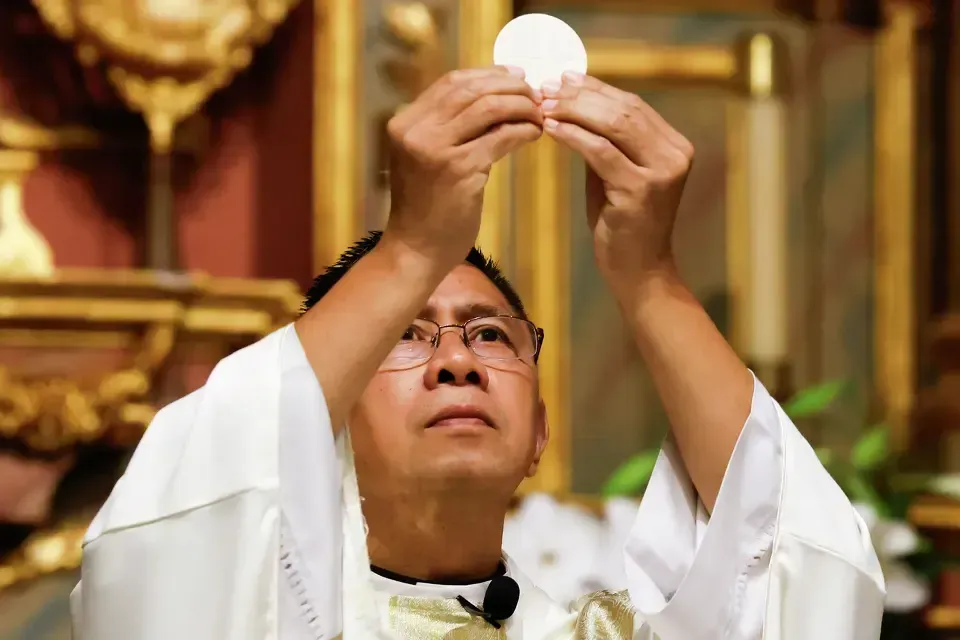
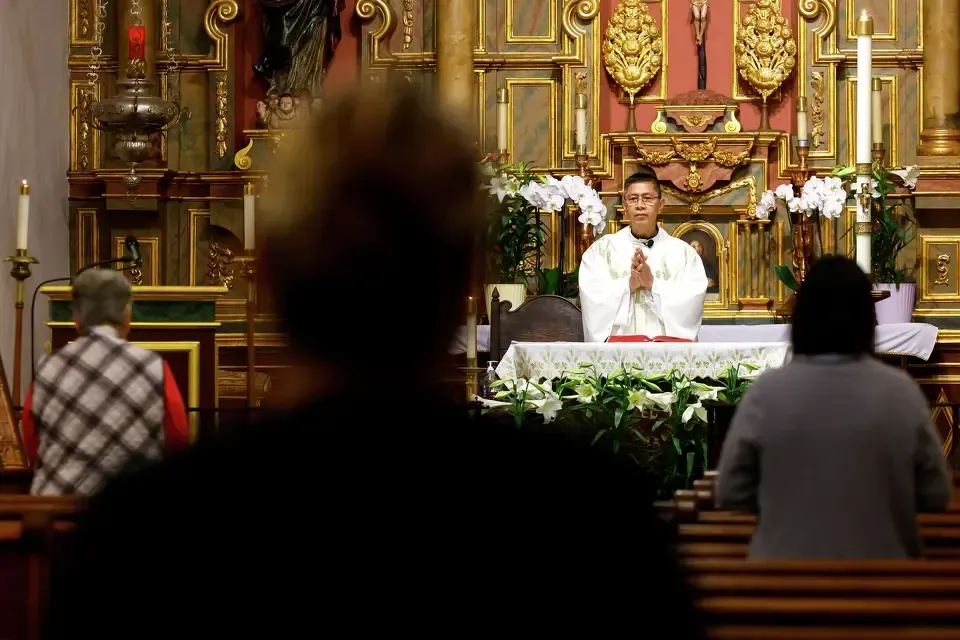
With grateful hearts, we welcomed Father Ray back to the altar. His journey of healing after his successful kidney transplant has been a testament to faith and resilience. We thank God for his recovery and for the gift of his continued ministry among us.

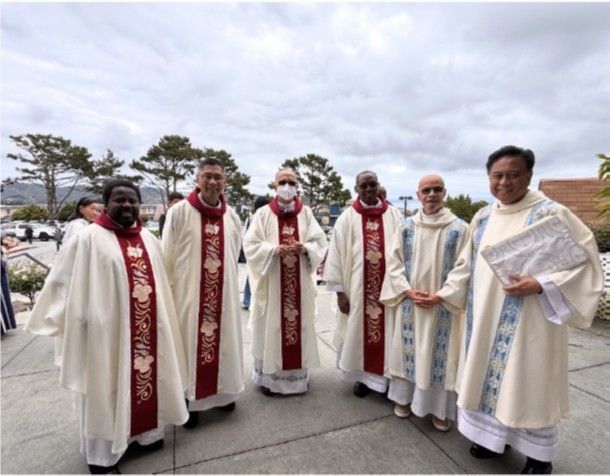
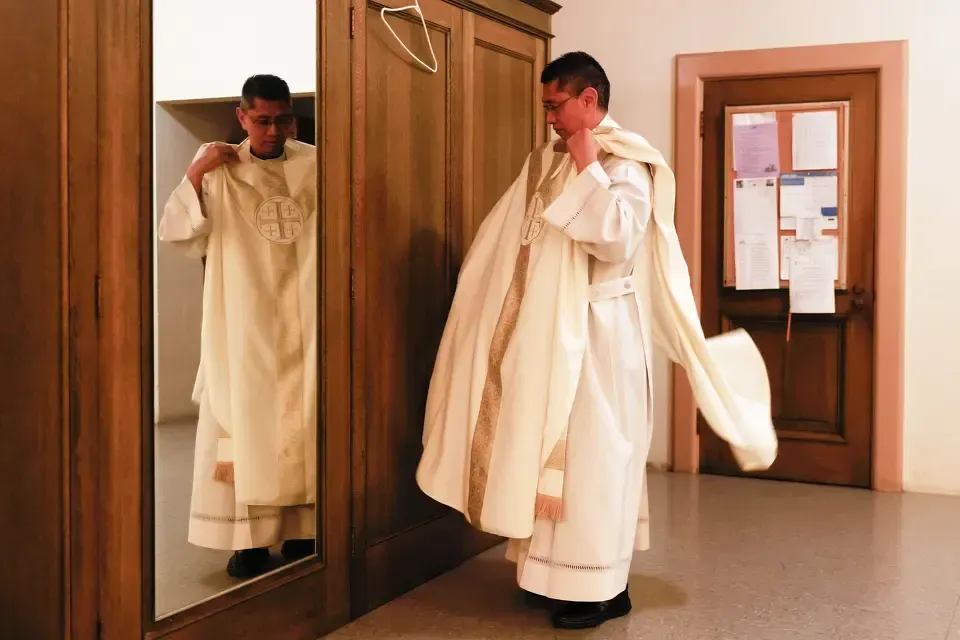
Thanksgiving Mass, May 3, 2026, before the 12:30 pm Mass entrance procession, in front of the church. L to R: Father Ifeanyichukwu Iwubunkeonye (Parochial Vicar), Father Francis Garbo (Pastor, The Mission Dolores Basilica), Father Raymund Reyes (Pastor), Father Raphael Lazier, Deacon Virgil Capetti, and Deacon Nestor Fernandez.

A match made in heaven: Fellow priests and countrymen become blood brothers as kidney donor and recipient


By Christina Gray | CSF Magazine | Archdiocese of San Francisco

By the time Father Raymund Reyes, the longtime pastor of St. Augustine Parish made an appeal to his South San Francisco parish community last fall, he’d been living more or less privately with chronic kidney disease (CKD) for over five years. Parishioners and fellow priests had taken notice of their beloved pastor’s weight loss and wan complexion. Only a few knew about the crippling fatigue, shortness of breath, edema, and infections he endured while fulfilling his pastoral duties.

 “Would you consider being a donor for me?” the 62-year-old priest asked his parish in a Sept. 25, 2025, letter which detailed his dire...
Read the full article


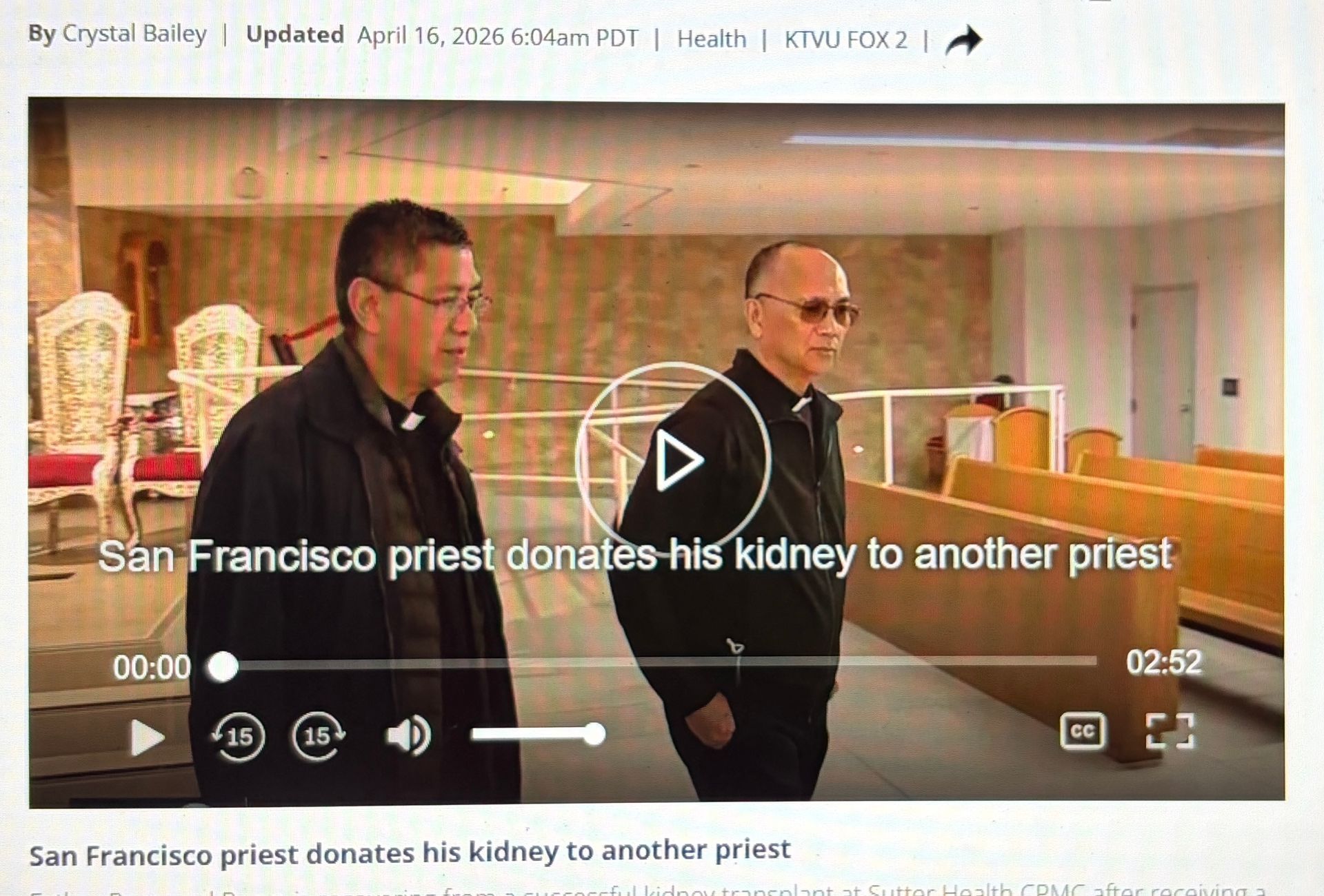
KTVU FOX 2 | San Francisco priest donates his kidney to another priest

NATIONAL DONATE LIFE MONTH

National Donate Life Month (NDLM) was established by Donate Life America and its partnering organizations in 2003. Observed in April each year, National Donate Life Month helps raise awareness about donation, encourages Americans to register as organ, eye and tissue donors and honors those who have saved lives through the gift of donation.


During National Donate Life Month in April, we honor the people who have given the gift of life through organ, eye and tissue donation. We also celebrate the lives that have been saved and healed because of a donor’s generosity.


This year’s theme uses trees as a symbol of life and connection. Just like trees grow and support each other in a forest, donation connects people – donors, recipients, and their families. Like a tree that grows and stands for generations, a donor’s gift leaves a lasting legacy of hope and life.


BAY AREA

A Bay Area priest needed a kidney transplant. Another heard his prayer


By Erin Allday, Staff Writer

April 13, 2026

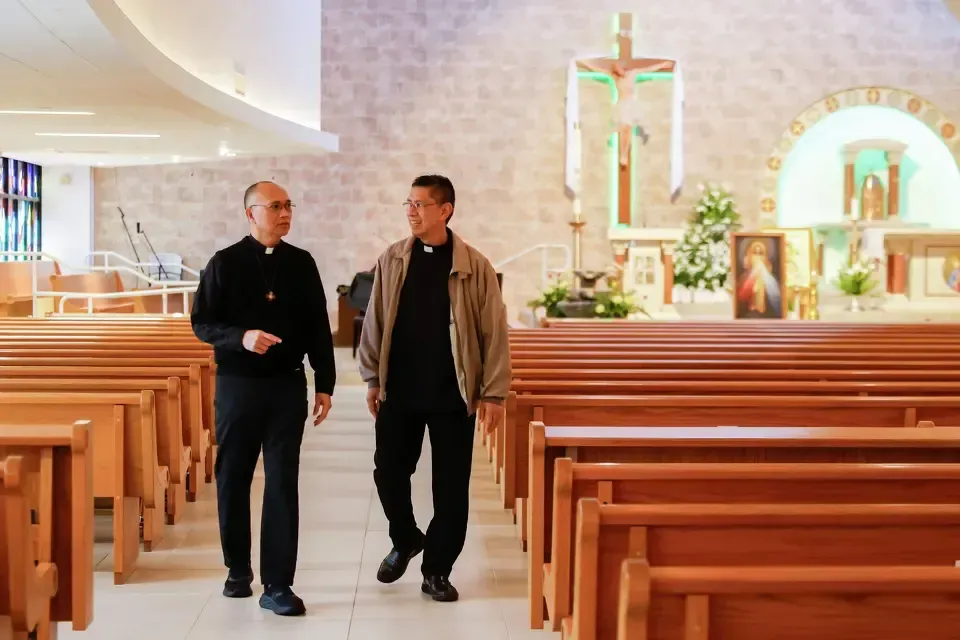
Father Raymund Reyes, left, and Father Francis Garbo walk through St. Augustine Catholic Church in South San Francisco, where Father Ray is pastor. Father Francis donated one of his kidneys to Father Ray in January.

Jessica Christian/S.F. Chronicle

A Catholic priest is called to serve. But for Father Ray, that call was getting harder to answer.


After seven years as pastor at St. Augustine Parish in South San Francisco, last year Father Raymund Reyes, 62, was in kidney failure. He was tired all the time, and dialysis three days a week wiped out what little energy he had left. He was put on a waiting list for a kidney transplant, but told it could take eight years. 


About 30,000 people are added to kidney transplant waiting lists in the United States every year, but only 22,000 transplants are performed. Hundreds of people die each year waiting for an organ.


The solution for Father Ray — and perhaps for many others — was not to wait. Instead he did what once would have felt impossible: He asked for help, and then he accepted from a friend a gift that he will never be able to repay.

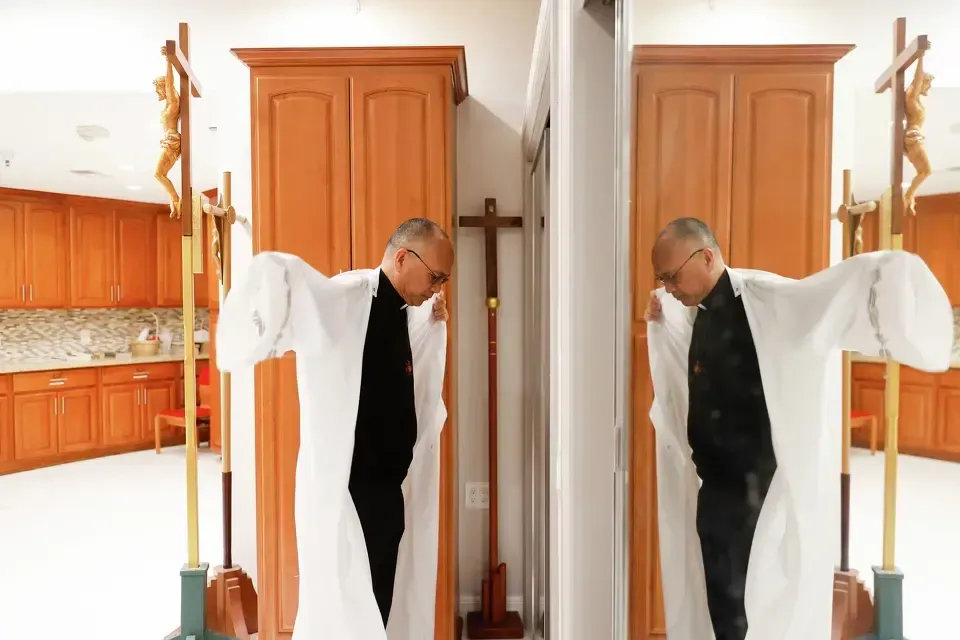
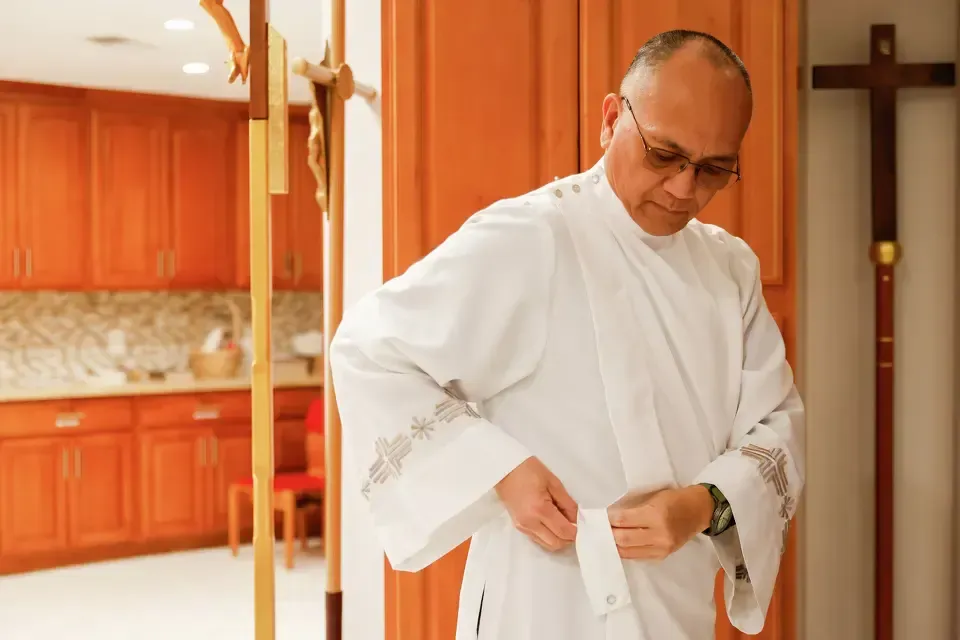
Father Ray prepares for services at St. Augustine Parish in South San Francisco. Father Ray had IgA nephropathy, an autoimmune disease that causes inflammation in the kidneys and can lead to chronic disease and organ failure.

Jessica Christian/S.F. Chronicle

On Jan. 20, Father Ray received a kidney from Father Francis Garbo, pastor of Mission Dolores Basilica and Misión San Francisco de Asís in San Francisco, in what’s known as a living donor transplant. Father Ray now has three kidneys, and Father Francis, 64, just one. 


Two days after Easter, both men were looking lively for lunch at Father Ray’s residence, a split-level home he shares with three other priests behind St. Augustine. Both men are trim with short graying hair and wire-rimmed glasses, and they exude a gentle calm that belies their humor.


When Father Francis walked in, Father Ray joked that he felt lit from within — like the kidney recognized its previous owner. 

“I’m just here to visit my kidney’s new parish,” Father Francis laughed in return.


The transplant was performed at Sutter Health’s California Pacific Medical Center in San Francisco, which is attempting to reinvigorate a once-thriving living donor program. At its peak in the 2010s, surgeons were doing 120 kidney transplants a year; now, CPMC performs just 30 to 40 a year. 


Across the United States, kidney transplants from living donors have dropped over the past 15 years — down from roughly 37% of transplants in 2010 to about 30% in 2025. The number of transplants from deceased donors has gone up, but so has the need for donor kidneys overall. That’s due in part to medical improvements that have allowed people to live longer with kidney failure, despite high mortality risk, and therefore remain longer on the waiting list.


“I think the only pathway out of this is to push for living donors,” said Dr. Shiang-Cheng Kung, a nephrologist who was recruited to rebuild CPMC’s living donor program last year.


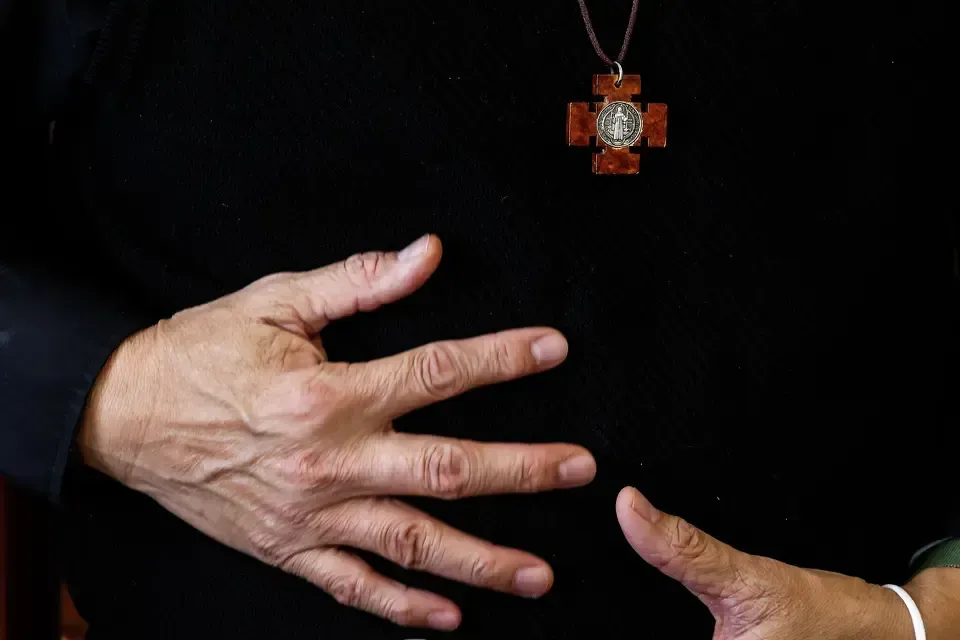
Father Ray touches the place on his stomach where he received a kidney from Father Francis. He had initially been reluctant to ask for help finding a donation.

Jessica Christian/S.F. Chronicle

Studies have shown that donating a kidney is generally safe, and living with one organ does not affect kidney function in the long-term. Donors have a slightly increased risk of developing high blood pressure and diabetes, but they have a normal life expectancy. They typically stay a few days in the hospital after surgery and take about six weeks to recover fully.


The reasons for the decrease in living donors aren’t entirely clear, but likely are tied somewhat to the pandemic, when hospital systems would not have had the resources to support programs that require extensive time investments, Kung said. Also, rates of obesity and diabetes have climbed significantly over the past two decades, which means more people are not considered healthy enough to donate.

But finding altruistic people who want, and are able, to donate is not actually the biggest hurdle in most cases — it’s encouraging reluctant patients like Father Ray to ask for what they need.


Maggie Jacobs, the living donor “champion” at CPMC who works with patients and families in need of a transplant, said only about 20% of the people she speaks with are willing to share their story and cast a wide net for a donor. “We live in a society where we’re conditioned to not talk about our medical problems,” Jacobs said.


A private struggle


Father Ray and Father Francis met in San Francisco in the late 1990s, shortly after both arrived from the Philippines, and established a quick friendship. They were busy with their jobs as they transferred to parishes around the San Francisco Archdiocese, but would find time about once a month to share a meal or golf, and they would run into each other at religious and community events.

The kidney disease diagnosis came in 2019, the same year Father Ray was made pastor of St. Augustine. He got checked out after noticing blood in his urine; at the time, he knew almost nothing about kidney disease. “When I met my nephrologist, I didn’t even know that was what a kidney doctor was called,” he said.


Father Ray had IgA nephropathy, an autoimmune disease that causes inflammation in the kidneys and can lead to chronic disease and organ failure. The condition, which is more common among Asians, is often slow-moving and can take years to develop into chronic disease, and for a while Father Ray managed the condition with diet and exercise. People commented on his weight loss, but he didn’t tell anyone, at first, about the diagnosis. 

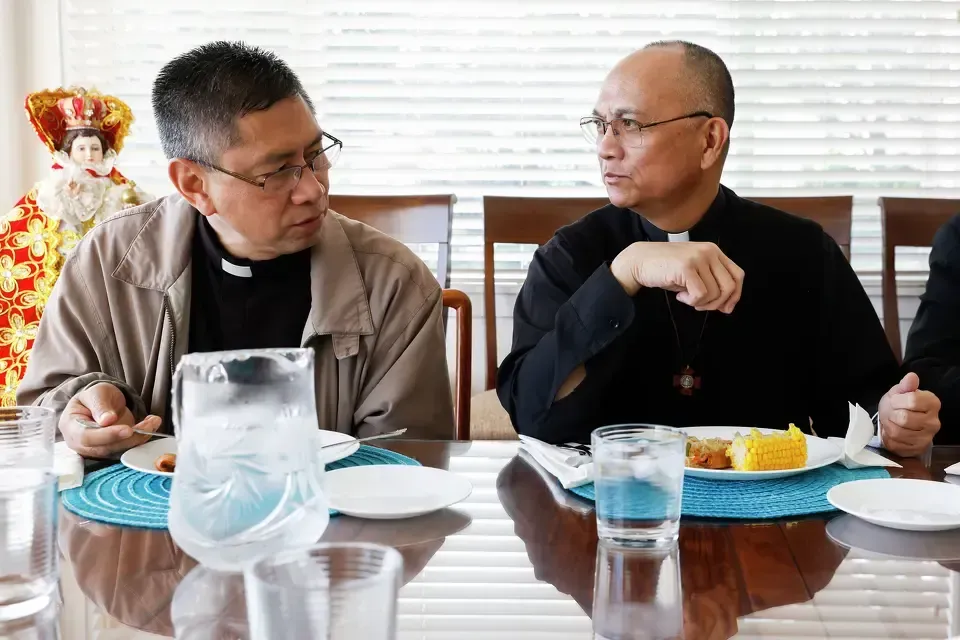
Father Francis, left, and Father Ray meet for a lunch of Filipino dishes like lumpia and pancit at Father Ray’s home on the property of St. Augustine Catholic Church in South San Francisco. 

Jessica Christian/S.F. Chronicle

Last year, though, symptoms of kidney failure appeared. He was short of breath and fatigued, and his legs became swollen with water retention. His doctors said he would need dialysis and eventually a transplant. Father Ray began to open up with a few close parishioners about his struggles.


“I was very private about it because as a priest, I didn’t want to make myself a burden to the community,” he said. “As a priest, I’ve always been trained to be of service to others as much as possible.”


Father Ray started dialysis, which artificially performs the fluid-balancing and waste-removal functions normally handled by kidneys. First he was at home, but after he developed an infection he moved to hemodialysis, which required visiting a clinic three days a week; he was on it for eight months. The dialysis itself was physically draining, and though Father Ray was still able to celebrate Mass, just walking from his home to the church 20 feet across a courtyard was a challenge. He often didn’t have the stamina to visit with parishioners between medical appointments.


During that time, a parishioner who worked for Sutter recommended that Father Ray move from Stanford, where he’d been treated for several years, to CPMC, where he might be on a shorter wait list for a kidney transplant.

He met Jacobs, who had experience with kidney donation from both sides of the transplant. Her husband had been a recipient and in turn Jacobs, bursting with gratitude, had donated a kidney to another patient, a stranger.

Father Ray puts on his vestments inside St. Augustine Catholic Church in South San Francisco. Before his kidney transplant, he was often so tired from medical appointments he couldn’t meet with his parishioners.

Jessica Christian/S.F. Chronicle

She had learned from her own experiences how difficult it was to ask for a kidney. How could someone be so bold, to ask for such a gift? But at the same time, her husband would die — how could they not?


“We don’t want to be a burden. We don’t want to ask for help. We don’t want to receive help. And there are a lot of emotions wrapped up in all of it — guilt, shame, fear,” Jacobs said.


“But if you can get past that wall,” she went on, “you will get an enormous outpouring of love and support. It truly is a reflection of the lives you’ve touched, including lives you don’t even know you’ve touched.”


Jacobs convinced Father Ray to share his story. She told him that he was surrounded by a community that would surely love to support him. She told him to imagine what a privilege it might be for someone to give him a kidney and save his life.


An unlikely match


In September, Father Ray wrote an open letter to his parish, revealing his condition and asking for their prayers. He told them he was looking for a donor. Eventually about 40 people volunteered, including four priests. 


None of the first volunteers worked out. Some weren’t healthy enough or had conditions that ruled them out. Others weren’t a good match, which could mean they didn’t have the right blood type or there was some other signal that made organ rejection a concern.


One day when Father Francis was visiting, Father Ray asked if he’d volunteered to donate, and Father Francis said he had not yet.


“I just brushed it off,” Father Francis said. “I did not see myself as a prospective donor. I did not even know my blood type. So I just continued to pray for prospective donors.”

Father Francis prepares for morning mass inside the Old Mission Dolores church in San Francisco. Father Francis did not initially expect to be a donor match for Father Ray.

Jessica Christian/S.F. Chronicle

He didn’t forget, though, and after a few weeks Father Francis pulled up the volunteer website and filled out the forms to be a donor. He got a call from Sutter a few days later, and then began a battery of tests.


Doctors made sure Father Francis and his kidneys were healthy, and that the priests’ blood types matched. They did psychological evaluations and talked Father Francis through what could happen to him, including the very small risk of death.


“They ask, ‘How will you feel if you have given the kidney and later on the patient doesn’t take care of it or something happens? ’” Father Francis said. “And I said, whether it is taken for granted, I have given it to them, it is theirs.”


They told him, he said, that people would call him a hero or a saint at first, and it might be tough to experience that and then go back to being just Father Francis. “I told them I’m already just an ordinary Joe.”


Just before Christmas, Father Francis got the call that he’d passed. He would be Father Ray’s donor. Staff at Sutter insisted that Father Francis be the one to tell Father Ray, so he drove down to tell him in person.

Father Francis leads the morning mass inside the Old Mission Dolores church in San Francisco. He was back home in three days after donating his kidney, and back at work within a week.

Jessica Christian/S.F. Chronicle

“We just sat in his living room and I asked how his dialysis was, and how he was feeling,” Father Francis said. “And then after that I said, ‘I passed. I got tested and I passed and I will be your donor.’”


“Was there tears? Was there crying? There was none,” Father Francis said with a chuckle. “He just asked why I did it, and I said, because you told me.”


Easter


The transplant was performed on a Tuesday morning. The night before, Father Ray’s care team — seven parishioners who had been feeding him and shuttling him to appointments and looking after him for months — held Mass with their priest and Father Francis.


“If something happened to me, in the operating room, it would have been my last Mass,” Father Ray said. “So I was offering to the Lord, thanking him for the opportunity to be a priest for the past 30 years. And thanking Father Francis for coming forward to make this happen. That was very, very meaningful to me.”


Father Francis was back home in three days and back at work within a week. He is the same as before, he said, but with a small scar below his belly button.


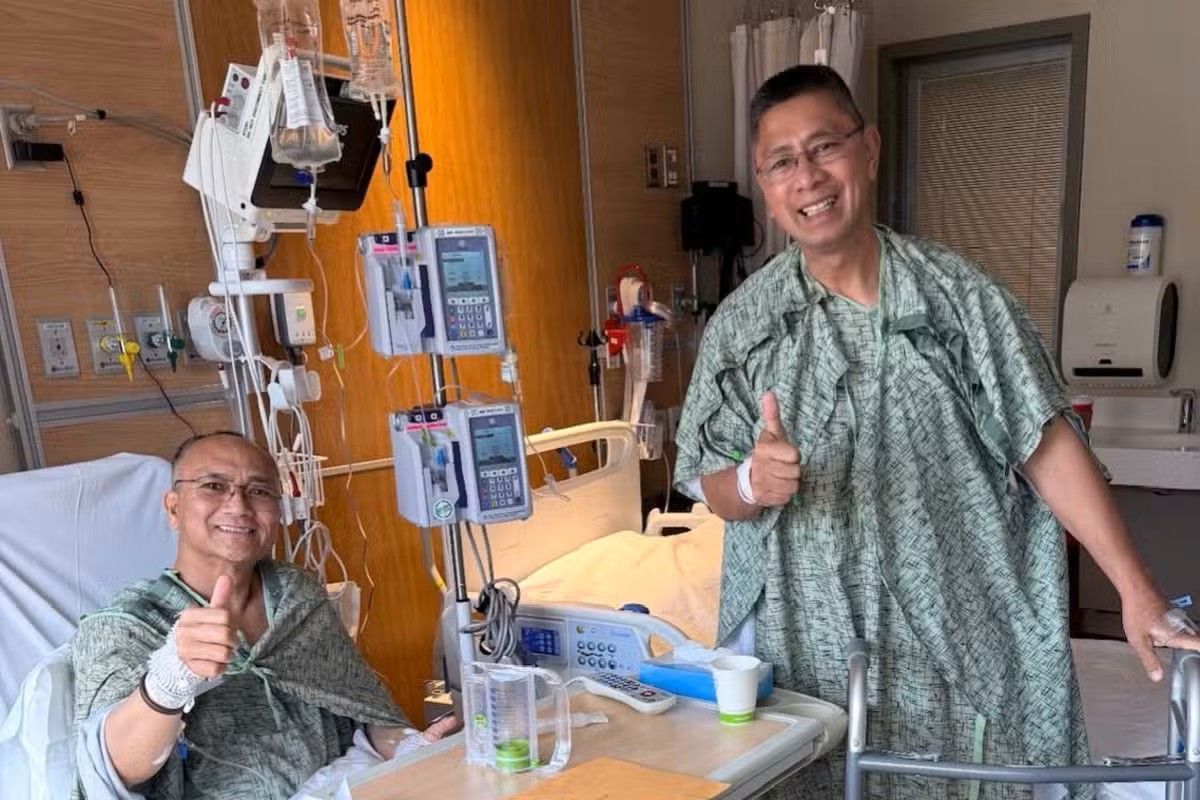
Father Ray is still recuperating; he takes 21 pills a day to prevent infection and organ rejection. But physically, he said he feels great. He’s walking at least 10,000 steps a day and he’s gained about 15 pounds — not all of it from the extra organ, he jokes.


Over the past year, Father Ray said, he prayed only once in despair, doubting God’s plan. “I would ask why would God let me experience this when I could have done more for him? Why would he let me suffer and become helpless?”


He found comfort in a verse from Psalm 103: “the Lord is kind and merciful.” This time of his life, he came to understand, was meant to teach him to accept that kindness and mercy and to treasure it.

Father Francis was told just before Christmas that he was a donor match for Father Ray, and drove to tell him the news in person.

Jessica Christian/S.F. Chronicle

On Easter Sunday, Father Ray got up early to watch a pre-dawn reenactment of the emotional reunion between Jesus and Mary after the Resurrection; it’s a Filipino Catholic tradition known as Salubong, and one of the highlights of Easter week for his parish. One of his colleagues led the Easter service, and after, Father Ray stood at his open door and waved and smiled at his parishioners. 


He’s looking forward to returning to his pulpit soon, perhaps in just a few weeks, and getting back to a life of serving others. It’s in that space that he is most comfortable, he said. But though priests are called to serve, they are also called to another purpose, Father Ray said: They are meant to bear witness.


“One day in our lives, when we can no longer do what we’re supposed to do because of age, because of illness, then we become a witness of God’s mercy,” he said. “Then you are a recipient of the goodness that comes from the people you serve.


“That’s how the mercy of God comes alive,” he said, “when you allow your vulnerabilities to shine, so people can extend their love.”

April 13, 2026

Erin Allday, Staff Writer

Link to original article | S.F.Chronicle:  https://www.sfchronicle.com/health/article/kidney-donation-priest-22080411.php

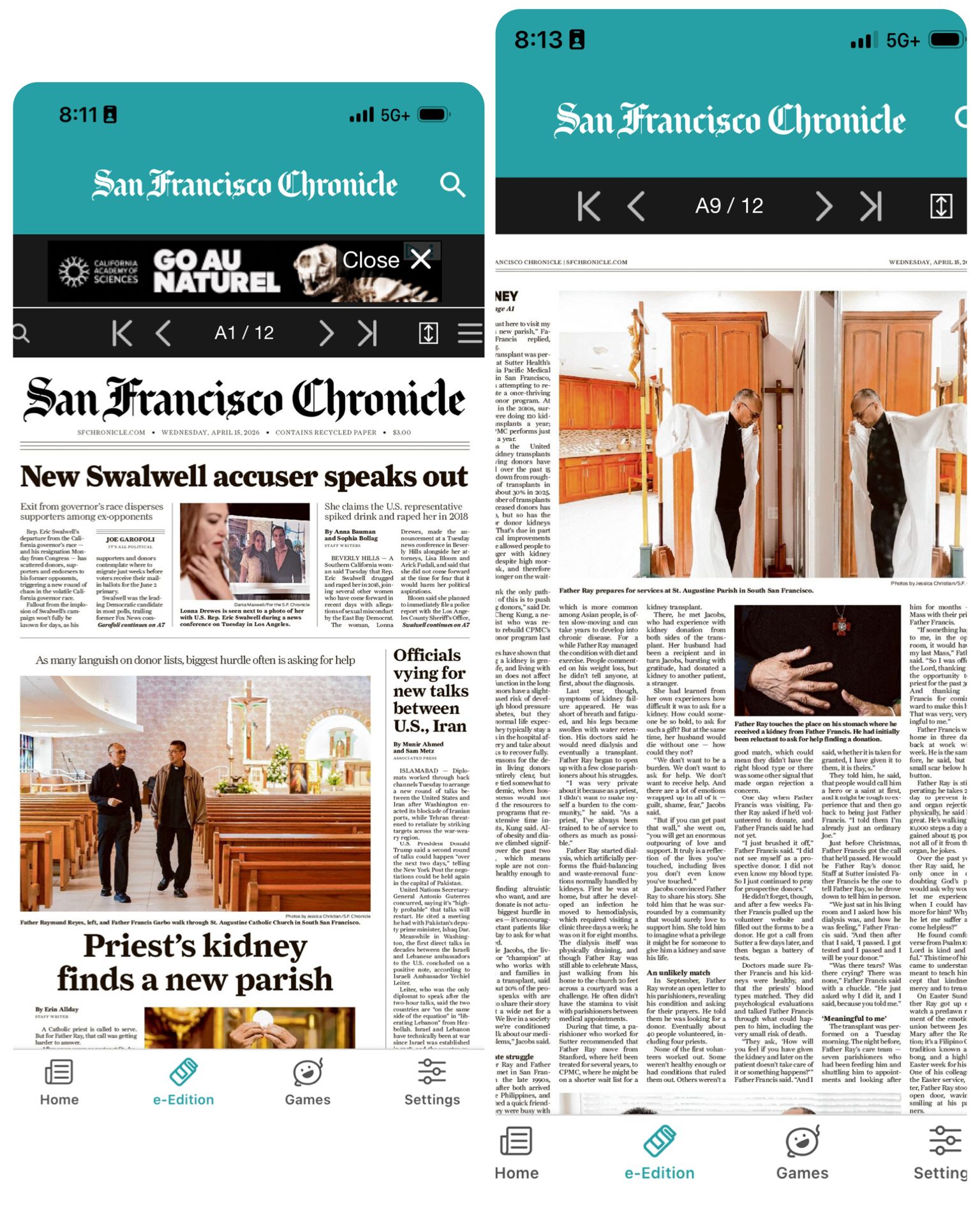
Shown above is the April 15, 2026 edition of the SF Chronicle.


A match made in heaven: Fellow priests and countrymen become blood brothers as kidney donor and recipient 

March 5, 2026


By Christina Gray  

By the time Father Raymund Reyes, the longtime pastor of St. Augustine Parish made an appeal to his South San Francisco parish community last fall, he’d been living more or less privately with chronic kidney disease (CKD) for over five years. Parishioners and fellow priests had taken notice of their beloved pastor’s weight loss and wan complexion. Only a few knew about the crippling fatigue, shortness of breath, edema, and infections he endured while fulfilling his pastoral duties. 

 “Would you consider being a donor for me?” the 62-year-old priest asked his parish in a Sept. 25, 2025, letter which detailed his dire situation. 


 Diagnosed with stage three CKD (of 5 stages) in 2019, Father Reyes was nearing end-stage renal failure. His kidneys were no longer filtering waste effectively from his blood or removing excess water from his body. Two different forms of dialysis, a process that mechanically filters the blood for patients with impaired kidney function, had resulted in several life-threatening infections. That summer Father Reyes learned there was only one treatment left. 


 “My doctors want me to consider getting a kidney transplant, which will give me my best chance of living a longer life to serve the people entrusted to me,” he wrote. 

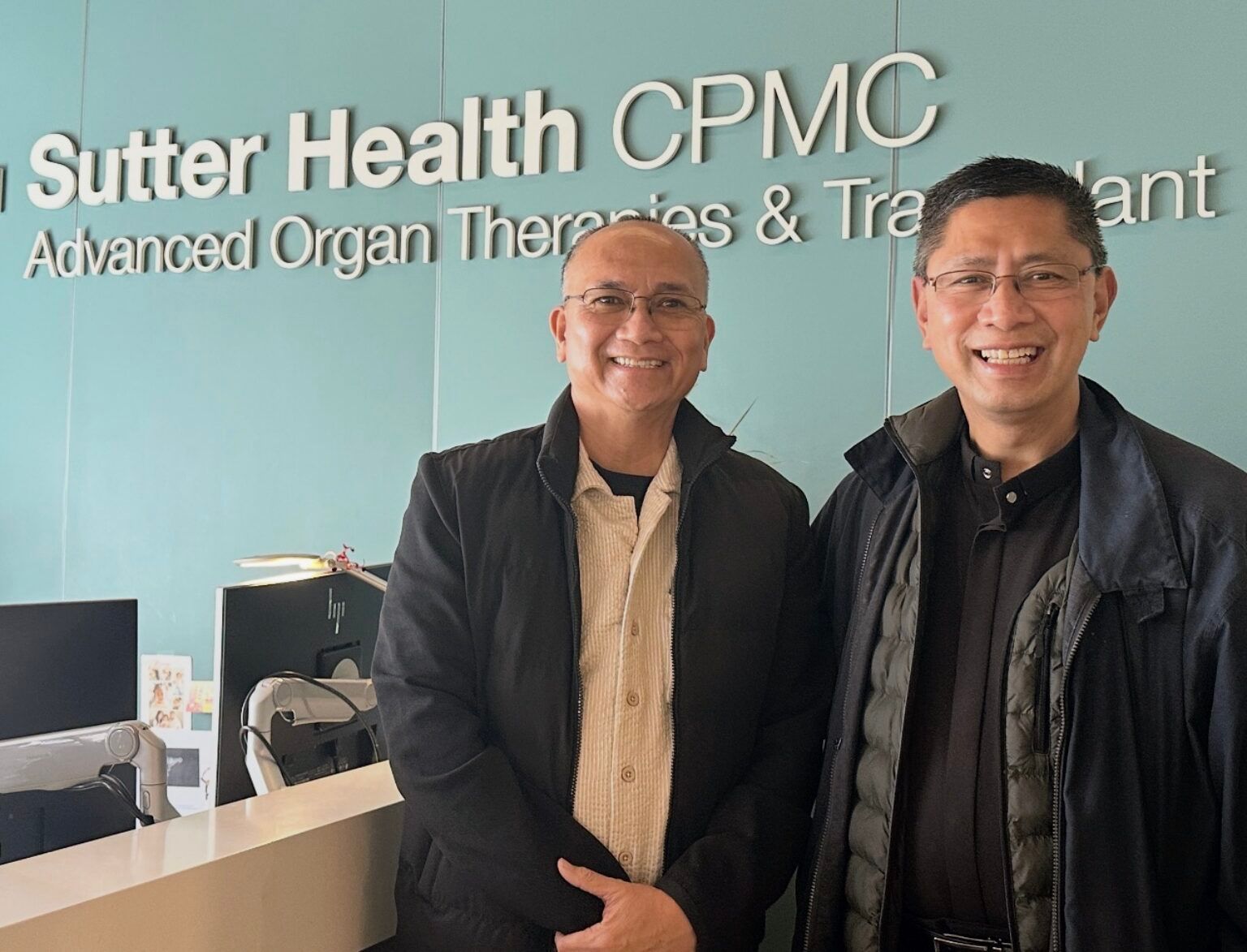
Father Raymund Reyes, left, pastor of St. Augustine Parish in South San Francisco, received the gift of life from Father Francis Garbo, right, pastor of Mission Dolores Basilica/Misión San Francisco de Asís in San Francisco. Father Garbo donated a kidney in a successful transplant surgery Jan. 20 to Father Reyes who had end-stage renal failure. (Photo courtesy of Vivian Ramos)

Literally, a friend for life  

Of the more than 40 individuals within and beyond the parish who responded to Father Reyes’ quest for a kidney donor, no one was a better match than Father Francis Garbo, pastor of Mission Dolores Basilica/Misión San Francisco de Asís. 

Father Reyes and Father Garbo arrived in San Francisco separately from the Philippines, one after the other in the late 1990s, and ministered to the Filipino-Catholic community here. Over the ensuing decades and through their respective pastoral assignments, they became friends. The pair joined together in Mass and meals with other Filipino priests on their days off, shared golf games, birthdays, basketball scrimmages, and memories of their shared homeland.  Today, they shepherd large, vibrant parishes only a dozen miles apart. 

Within the tight-knit Filipino-Catholic community dear to both priests, Father Reyes’ need for a kidney transplant became common knowledge in the last half of 2025. While many in the parish and larger local Catholic community stepped forward willing to be a donor (including family members and four other priests) none had proved to be a viable match.  

Father Garbo explored the living donor application process online, but made no mention of it to Father Reyes when his friend asked him directly, “What about you? Have you signed up yet?” His questions were asked somewhat in jest, but what Father Garbo heard was not a joke as much as a plea. 

Unwilling to let Father Reyes hang his hopes on a kidney he didn’t know he’d be eligible to give, Father Garbo discreetly completed a rigorous and extended battery of qualifying tests and interviews between his pastoral duties. 

Prior to Christmas, he learned that he was an optimal match. Not only did he share Father Reyes’ blood type and have no medical conditions that would eliminate him as a donor, but his kidney function was better than what is considered “normal.”  


For Father Garbo, it was the kind of sign he had been looking for as he prayed for guidance: “Lord, if it is your will that I help Father Ray with the gift you have given me, my kidney, it is yours and I am willing.”  


He hurried to the St. Augustine parish rectory to deliver the news in person. A stunned Father Reyes asked him why he did it.  He knew well the demands of a being a pastor of a large parish. “Because you asked me,” Father Garbo said simply. 

 A surgical date was scheduled at Sutter Health’s California Pacific Medical Center, a transplant leader that performs over 200 kidney transplants per year. Jan. 20 was the day one priest would give, and another priest would get the gift of life.  

 Archbishop Salvatore J. Cordileone rejoiced at the news and sent a letter to the priests of the archdiocese asking for their prayers for both priests and commending Father Garbo for his sacrifice.  


 On the night before the surgeries, Father Vito Perrone, pastor of Mater Dolorosa Parish, anointed both priests and heard their confessions. On the morning of the transplant, Father Reyes and Father Garbo were wheeled into separate surgical arenas, the prayers of the local Catholic community going with them. One day later, tests showed that Father Reyes’ kidney function was already returning to normal levels.  


A pastor’s blessings and burdens  

Father Reyes was born in the Province of Pampanga on the outskirts of Manila. Ordained in 1988, he served as a parish priest at three different parishes in the Archdiocese of San Fernando before moving to the U.S. at the request of his archbishop to serve at St. Patrick Parish in San Francisco. Many from his home province worshipped there. His short-term assignment as parochial vicar at St. Patrick led to long-term pastoral roles at St. Isabella Parish in San Rafael and St. Anne of the Sunset Parish in San Francisco. In 2014, he was appointed vicar for clergy, and in 2019 — the same year as his diagnosis, he was concurrently installed as pastor of St. Augustine Church. Father Reyes was incardinated in 2005.  


 “Father Ray carried a heavy cross quietly,” St. Augustine parishioner and parish council vice chair Vivian Raval Ramos told Catholic San Francisco. Ramos became one member of an integral care team for Father Reyes that almost mystically materialized at the point his kidney disease reached its most critical stage. It included Ramos, her husband Glenn, a medical doctor from the Philippines, his sister Rochie Ramos Guintu, a nephrology nurse with decades of experience in dialysis care, Christmas Tiletile, a member of the choir and the Live Kidney Transplant Coordinator for California Pacific Medical Center in San Francisco, and parishioners Joriz and Susan Madrid. 


“Few knew that behind his steady presence at Mass and his thoughtful homilies were repeat hospitalizations, dialysis treatments, infections, and profound physical suffering,” said Ramos. Even while very ill, he continued writing his weekly pastoral message on Flocknote, celebrated parish feasts and novenas complete with large meals afterwards. “Had Father Ray not sought help to find a kidney donor, only we (his care team) would have known the extent of what he endured.”  

He lived with the “full burden” of uremia, she said, a clinical description of the buildup of waste products and toxins in the blood, the result of kidney failure. Untreated, it causes severe physical and mental symptoms and certain death.  


Kidney disease and donation  

According to the U.S. Centers for Disease Control and Prevention, one in seven adults, or about 35.5 million people (or 14% of the population) are estimated to have chronic kidney disease. As many as 9 in 10 adults with CKD do not know they have it. Primary risk factors include diabetes and high blood pressure. Others include heart disease, obesity, family history, inherited disorders, past kidney damage, and aging. CKD is more common in Black, Asian and Hispanic adults than White adults.  


From outside appearances, Father Reyes appeared to be the picture of health. He had been a familiar sight jogging through his parish neighborhoods. After his initial diagnosis at Stanford Medical Center, a biopsy determined his kidney failure was caused by “IgA Nephropathy,” also known as Berger disease. It’s a disease more prevalent in Asians.  Hypertension, or high blood pressure, as with so many with kidney disease, also contributed, said Father Reyes. 


Sadly, only three days after Father Reyes received his new kidney, his brother, “Ronnie” Macaplinlac Reyes, died of complications related to the treatment of his own kidney disease in the Philippines.  


 Father Reyes’s care was managed by Sutter Health’s Kidney Program at California Pacific Medical Center (CPMC) in concert with his care team. Initial treatments were unsuccessful in halting the progression of his disease.


 Father Reyes signed up for the donor program at the United Network for Organ Sharing (UNOS), that had a kidney waitlist of nearly 90,000 people. He had also signed up at Stanford and had added his name to the list at Sutter Health.  

He explained the race for time in his September letter: “I could wait for a kidney from a donor who has died in California, but the wait is about 6-8 years — time that I obviously don’t have.”  


A “conversion” within a crisis  

Father Reyes said that he kept his diagnosis to himself for as long as he did because he believed he could and should handle it on his own. “I didn’t want to talk about my struggles in public,” he said. Nor did he want to add to the burden of the very people who looked to him for pastoral care and guidance.  


But his health crisis also gave him the opportunity to become a better priest by sharing his vulnerabilities and needs. 

“It converted me,” said Father Reyes, who will ease back into his pastoral duties slowly after a period of isolation, monitoring and recovery. “I owed it to my parishioners to let them know what was going on in my life,” he said. “They ask me to pray for them, why can’t I ask them to pray for me?”  

He described the effect of his willingness to “talk more openly about my struggles.” It directly informed his homilies, he said. “I got countless notes thanking me for being an example for them with their health challenges.”  

 Father Reyes wrote his appeal letter for a kidney donor and posted it to his Facebook account and in the church bulletin that was then shared throughout the Archdiocese of San Francisco. With the blessing of the archbishop, Father Reyes was seeking a kidney donor beyond the three transplant pools to which he was registered.  


A donor’s discernment  

Father Garbo and Father Reyes didn’t know each other when they first met at St. Patrick Parish in San Francisco. Msgr. Fred Bitanga was at that time the first of three Filipino pastors there, and according to Father Garbo, “like a godfather to us.” 


St. Patrick Parish was like an “Ellis Island for Filipino priests” as they came to San Francisco, according to Father Garbo, who was ordained in the Archdiocese of Manila in 1990.  

Father Garbo had recently concluded his appointment as the first Superior General of the Marian Missionaries of the Holy Cross when he arrived in the U.S. in 1998. His visit to Msgr. Bitanga and to local relatives led to an assignment in 1998 as parochial vicar of St. Andrew Parish in Daly City, still a primarily Filipino parish. He was incardinated in 2005. After serving pastoral terms at Our Lady of Loretto in Novato, St. Charles Parish in San Carlos, and St. Timothy Parish in San Mateo, Father Garbo was named pastor of Mission Dolores Basilica/Misión San Francisco de Asís in 2015.  

After learning that the dozens of people willing to donate a kidney to Father Reyes had not produced a match, Father Garbo took the matter up with God.  


“Lord, I am turning 65 years old this May,” he said. “What more can I give?”  After he was confirmed as an eligible donor, however, Father Garbo wrestled with more human impulses. Misión San Francisco de Asís is celebrating its 250th anniversary this year with many special events. He had pilgrimages planned, a special quinceanera, and all the regularly scheduled liturgies and activities of a large parish and tourist destination.  “I was ready, let’s do it now,” he said smiling at the memory. “I wanted to give, but also wanted it to take place immediately and according to my plan and schedules.”  


Father Garbo likened being a donor to being an expectant mother carrying another life.  “You begin to be very careful about what you eat and everything you do,” he said.  He was impressed with the spiritual and mental preparation he received as an organ donor. “They will tell you the ups and downs to expect,” he said. “It’s a very holistic process.”  

As for the surgery itself, his kidney was removed laparoscopically four inches below the belly button. His surgeon showed him his own kidney, a precious, life-sustaining organ about the size of a clenched first. 


Service and witness 

While Father Reyes received a new kidney, he also learned to see his priesthood through new eyes. 

During one of his many hospitalizations, he questioned why God “would let me go through this” when he needed to be well enough to fulfill his ministry.  A priest friend reminded him that a priest’s life span includes both service and witness.  


Priests are called first to ‘diaconia,’ the Greek word for service, his friend said. But the time will come when serving is difficult or impossible because of old age or illness. The next stage of ministry is ‘marturia,’ he said, rooted in the Greek word for witness. “There will be a time in our lives where we can just be a recipient of the love of God and the people he sends,” he said.  


Christina Gray is the lead writer for Catholic San Francisco. 


Link to the original Catholic San Francisco article: https://tinyurl.com/46m7ahbd


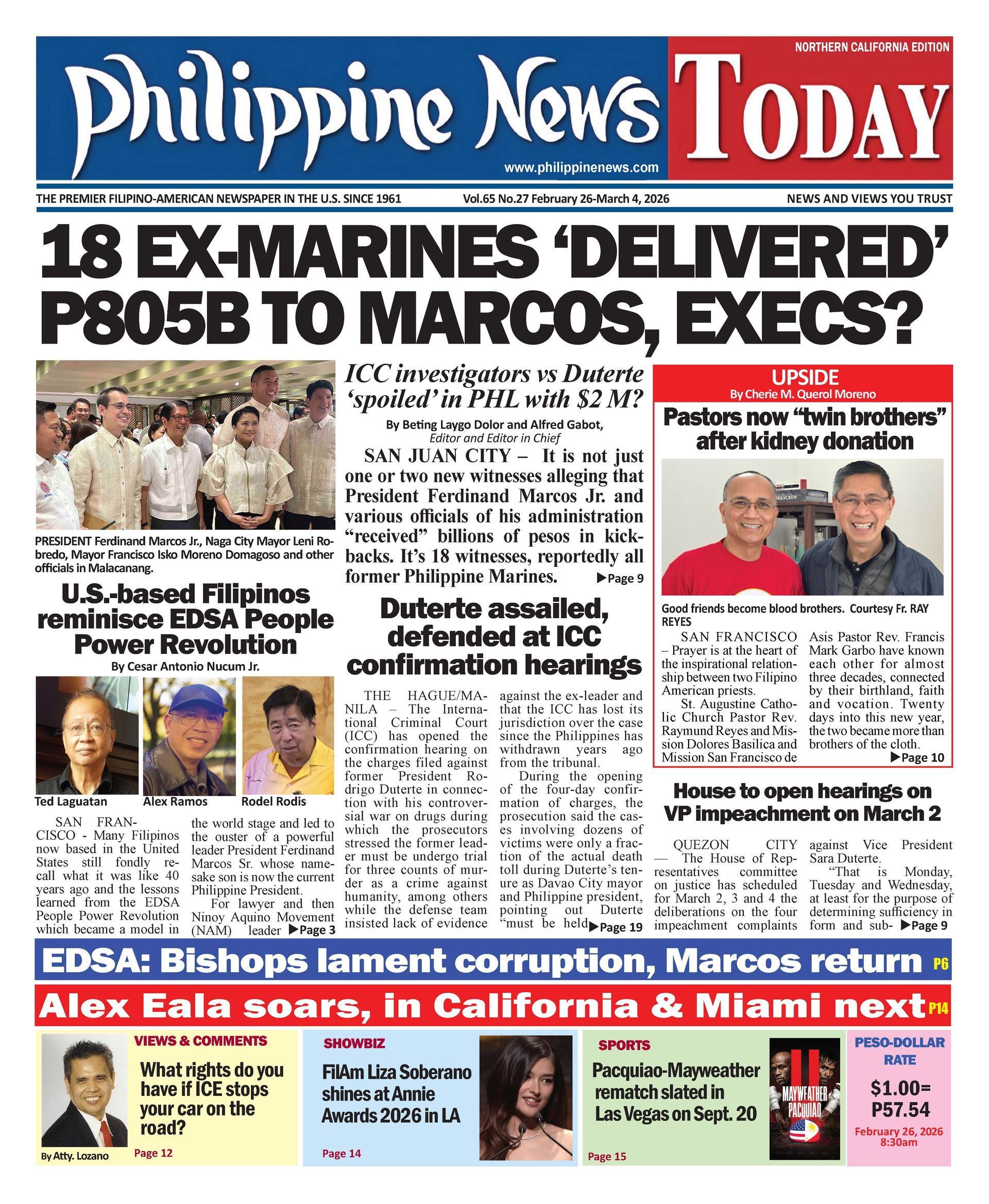
UPSIDE: Pastors now ‘twin brothers’ after kidney donation


  manilateam     Posted on February 26, 2026

SAN FRANCISCO – Prayer is at the heart of the inspirational relationship between two Filipino American priests.

St. Augustine Catholic Church Pastor Rev. Raymund Reyes and Mission Dolores Basilica and Mission San Francisco de Asis Pastor Rev. Francis Mark Garbo have known each other for almost three decades, connected by their birthland, faith and vocation. Twenty days into this new year, the two became more than brothers of the cloth.

“Father Francis is a saint, my hero and now my twin brother,” Reyes told INQUIRER.NETUSA, exulting Garbo for having given him the “gift of a second life” – a healthy new kidney.


Theirs is a story of faith, hope and generosity. Transplantation between priests and relatives have occurred in the Archdiocese of San Francisco, but organ donation between two priests was unheard of, according according to church authorities.

Garbo was among few privy to a health condition besetting Reyes, who was installed pastor of the South San Francisco parish in 2019.


HEALTH CHALLENGE


That same year Reyes was diagnosed with stage 3 chronic kidney disease. When his conditioned worsened, his doctor advised he would eventually need dialysis. Otherwise his best option was to find a living kidney donor. He was advised that a transplant was a treatment but not a cure.


Reyes opted to try peritoneal dialysis, a self-administered procedure following strict protocols once a day. He later had hemodialysis, where his blood was filtered through a machine three times a week. Neither changed his condition; in fact he required hospitalization three times for severe infection.


He had been registered with the United Network for Organ Sharing through Stanford and California Pacific Medical Center Sutter Health lists for a donor.


In 2025 his symptoms worsened as he faced the ultimate option for survival.


Ever hopeful, the Pampanga native, in consultation with Archbishop Salvatore Cordileone, widened the search to include relatives, parish staff and friends.


Parishioners noticed a difference in his appearance but did not ask why he had lost weight and his face was ashen, he told Inquirer.net USA.

“At first I was not telling anyone the reason, believing I could handle the matter. But the situation came to a point that I couldn’t do anything anymore and had to ask for help,” he said. He asked a doctor parishioner to accompany him to UC Davis to apply for transplant there. He found another source of hope in a parishioner working in the CPMC kidney program.


PERSONAL APPEAL


“It converted me,” he disclosed the impact of sharing his plight. “As a priest I owe it to the parishioners to know what’s going on in my life. Besides I need them to pray for me. They ask me to pray for them, why can’t I ask them to pray for me.”

Reyes wrote an appeal-and-share letter posted on his Facebook account and in the church bulletin, detailing his condition and the steps he had taken to “keep my life healthier and longer other than dialysis.”


The letter was circulated throughout the archdiocese, covering the counties of San Francisco, San Mateo and Marin.

“For the first time I felt the solemnity of the people, and I can tell you the remarks and text messages I’ve received thanking me for giving them hope and strength that on top of my treatments I was there for them. And that I also served as an inspiration for them, functioning as a priest despite what I’m going through.”


One moment he “questioned God why I was suffering when I could serve him more if he were not letting me go through this,” he said. That’s when he received a text from another priest reminding him of “diaconia” or “service – our first calling, we are meant to serve people.”


“Remember there will come a time when you have no more ability to help, maybe because of illness or old age that would stop you from being able to serve,” Reyes quoted his peer’s counsel. “But ministry doesn’t end there because there is ‘maturion’ or testimony, a time to witness the love of God through others.”


Though humbling, the reversal gave him a new perspective, deepening his empathy for homebound parishioners and patients whose confession he heard at dialysis clinics – a new congregation he has embraced. – Adapted from original reprinted with permission for INQUIRER.NETUSA


Fil-Am priests become ‘twin brothers’ after kidney donation

Fr. Francis Garbo is 'my hero and now my twin brother,' shares Fr. Ray Reyes


By: Cherie M. Querol Moreno - @inquirerdotnet

INQUIRER.net US Bureau / 07:27 PM February 17, 2026

SAN FRANCISCO – Prayer is at the heart of the inspirational relationship between two Filipino American priests.

St. Augustine Catholic Church Pastor Rev. Raymund Reyes and Mission Dolores Basilica and Mission San Francisco de Asis Pastor Rev. Francis Mark Garbo have known each other for almost three decades, connected by their birthland, faith and vocation. Twenty days into this new year, the two became more than brothers of the cloth.


“Father Francis is a saint, my hero and now my twin brother,” Reyes told Inquirer.net USA, exulting Garbo for having given him the “gift of a second life” – a healthy new kidney.


An organ donation by one priest to another within the archdiocese was unheard of until then. Most successful matches are between blood relatives, which Reyes and Garbo are not.


Both are healing a month later to the relief of a community that had prayed for favorable outcome when word first went out about Reyes’ life-threatening condition.


Health challenge


That same year Reyes was diagnosed with stage 3 chronic kidney disease when he began experiencing loss of energy, shortness of breath and severe edema. His doctor advised him that he would eventually need dialysis. Otherwise his best option was to find a living kidney donor. He was advised that a transplant was a treatment but not a cure.


Reyes opted to try peritoneal dialysis, a self-administered procedure following strict protocols once a day. He later had hemodialysis, where his blood was filtered through a machine three times a week. Neither changed his condition; in fact he required hospitalization three times for severe infection. 


He had been registered with the United Network for Organ Sharing (UNOS) through Stanford and California Pacific Medical Center (CPMC) Sutter Health lists for a donor. 


In 2025 his symptoms worsened as he faced the ultimate option for survival.


Ever hopeful, the Pampanga native, in consultation with Archbishop Salvatore Cordileone, widened the search to include relatives, parish staff and friends. 

Parishioners noticed a difference in his appearance but did not ask why he had lost weight and his face was ashen, he shared.


“At first I was not telling anyone the reason, believing I could handle the matter. But the situation came to a point that I couldn’t do anything anymore and had to ask for help,” he said. He asked a doctor parishioner to accompany him to UC Davis to apply for transplant there. He found another source of hope in a parishioner working in the CPMC kidney program.


Personal appeal


“It converted me,” he disclosed the impact of sharing his plight. “As a priest I owe it to the parishioners to know what’s going on in my life. Besides I need them to pray for me. They ask me to pray for them, why can’t I ask them to pray for me.”


Reyes wrote an appeal-and-share letter posted on his Facebook account and in the church bulletin, detailing his condition and the steps he had taken to “keep my life healthier and longer other than dialysis.”


The letter was circulated throughout the archdiocese, covering the counties of San Francisco, San Mateo and Marin.

“For the first time I felt the solemnity of the people, and I can tell you the remarks and text messages I’ve received thanking me for giving them hope and strength that on top of my treatments I was there for them. And that I also served as an inspiration for them, functioning as a priest despite what I’m going through.”


One moment he “questioned God why I was suffering when I could serve him more if he were not letting me go through this,” he said. That’s when he received a text from another priest reminding him of “diaconia” or “service – our first calling, we are meant to serve people.”


“Remember there will come a time when you have no more ability to help, maybe because of illness or old age that would stop you from being able to serve,” Reyes quoted his peer’s counsel. “But ministry doesn’t end there because there is ‘maturion’ or testimony, a time to witness the love of God through others.”


Though humbling, the reversal gave him a new perspective, deepening his empathy for homebound parishioners and patients whose confession he heard at dialysis clinics – a new congregation he has embraced.


Community prayer

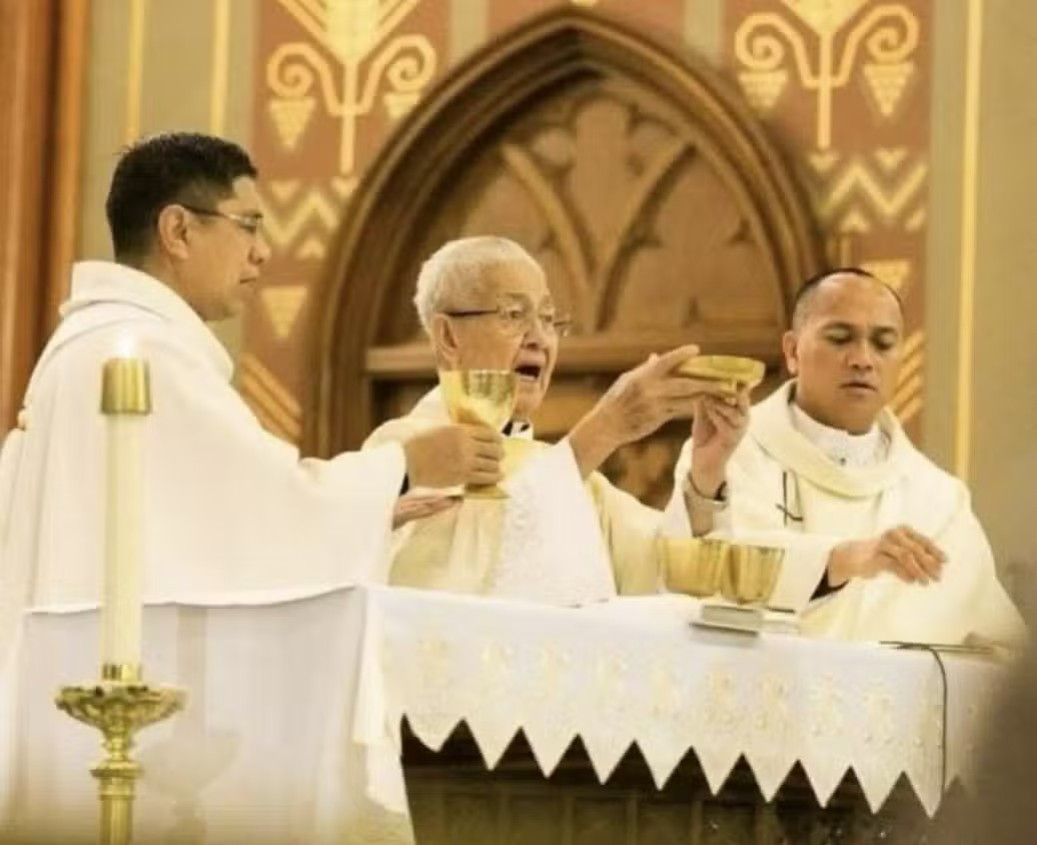
Fr. Francis Garbo (left) and Fr. Ray Reyes (right) concelebrate Mass with their mentor Monsignor Fred Bitanga, one of the first Filipino pastors in the Archdiocese of San Francisco. Photo from Fr. Mark Reburiano

The news spread swiftly in the Filipino American community. 


San Francisco resident Nellie Hizon said she included Reyes in her “prayers and continued to ‘monitor’ his progress through other contacts, email and social media.”


Soon she “received many requests for prayers as a search for a donor match was on,” said the vice chair of the Archdiocesan Pastoral Council under Archbishop George Niederauer.


St. Augustine Praise & Glorify Choir member Nannette Nepomuceno had heard about the search and was “cautiously optimistic that Father Ray would find a kidney donor.”


“There may be a number of willing donors but may also turn out to be incompatible when matched,” pondered the Daly City resident, a Bay Area medical researcher and an MD.


Fr. Francis was among confidantes who would check on the ailing Father Ray.


Parallel beginnings


The two priests did not know each other when they came to this country to visit relatives in the late 1990s. By then the Archdiocese of San Francisco was home to several priests from the Philippines, including Monsignor Fred Bitanga, the first of three Filipino Pastors at St. Patrick Church, whom newcomers sought for advice.


Fr. Ray arrived in the fall of 1997 and began his work in 1998 at Bitanga’s parish in San Francisco’s South of Market district, where many Filipino and other recent arrivals settled. He started as assistant before becoming parochial vicar in 2003. Later he was assigned to St. Isabella in San Rafael, Marin County, then back to St. Anne of the Sunset as pastor.


In 2014, Reyes was appointed Vicar for Clergy until 2020, concurrently in his first year at St. Augustine. 


Fr. Francis began his service in the spring of 1998. Originally from Manila, he first served as parochial vicar at St. Andrew Parish in Daly City, where Filipinos outnumber all populations of color. He moved on to Our Lady of Loretto in Novato, Marin County, then back to the Peninsula in St. Timothy Church in the City of San Mateo.


In 2015 he was named 17th pastor of the historic Mission Dolores and Mission San Francisco de Asis founded in 1776.

Now in their 60s and faith community leaders, Reyes and Garbo became even closer these past eight months of their shared spiritual and physical journey.


Unknown to Fr. Ray, his confidante Fr. Francis was undergoing tests for a donor match. Photo from Fr. Ray Reyes

Through a parish and a Sutter Health kidney program announcement, Garbo learned about Reyes’ search for a kidney donor. He reviewed the online screening form and began to complete the questionnaire but wavered. He was unsure about details regarding his family health history, but his desire to help remained strong as he continued to check in with Reyes, Garbo shared.


On one of the ensuing visits, he asked Reyes for an update on the search.


“Not lucky yet,” Fr. Ray replied, before adding, “How about you? When are you going to sign up?’” Reyes told Inquirer.net USA he was joking, not realizing the power of his words. Because hearing it pushed Garbo to complete the registration form when he got home from the visit.


Garbo was willing to donate a kidney without knowing his blood type or if he was an ideal candidate.


What followed seemed preordained as Garbo passed all tests, showing he was a potential match. Reyes was informed of the development but not the person’s identity.


Blood brothers


Fr. Francis himself went to St. Augustine to break the good news to his friend. 


“I was really surprised,” Reyes shared. ”To tell you the truth priests were the least I expected to come forward because of their busy schedule, but four priests registered, including a retired priest.”


“Are you sure you wanna do this?” Reyes then asked, touched by the 28 years of friendship with the peer who was the answer to his prayer.


“He was the first one I would reach out to exchange views, not knowing this will be a part of it,” said Reyes, awed by the turn of the relationship. “The brotherhood that already existed between us through their late common mentor Father Bitanga solidified on January 20. Archbishop Cordileone told us we are not just brothers in the priesthood but also blood brothers.”


As he had done a few months before, Reyes posed a question to his friend: “What made you decide to do the evaluation and be a donor?”


This time it was Garbo‘s turn to jest, “Because you forced me,” and they both laughed, Reyes recalled. 


Garbo then turned serious: “It is because you asked me.”